Author:

editor

Negotiations Are Not Enough

Hon. Douglas Roche, O.C.
Comments to CNANW, November 29, 2022 in Ottawa

Is peace possible in today’s world? Suppose, by some twist of fate, a sudden ceasefire in the Ukraine war occurred without either Ukraine or Russia being declared a winner; and Russia’s threat to use nuclear weapons stopped; and Canada actually used its diplomatic machinery to become active in helping both Ukraine and Russia to live with the geopolitical contours agreed at the negotiating table. Would the world then be at peace? Unfortunately, the answer is no.

Read the full statement here: Negotiations are Not Enough

“Nuclear Threats and Canada’s Disarmament Diplomacy”

Paul Meyer, CIPS/CNWC event,
University of Ottawa, November 28, 2022

Video of event: https://youtu.be/1aFwviz27MY


“Nuclear weapons and the existential threat they pose to humanity have assumed a new and disturbing saliency in the last few months. Russia’s aggression against Ukraine, accompanied as it is by persistent nuclear “sabre-rattling” and the blatant use of these weapons as instruments of intimidation and coercion has rudely reminded global society that huge arsenals of these weapons of mass destruction remain. But it could be worse.”

Continue reading here: NuclearThreats

Polanyi: We have to believe in a world without war – and science should lead the way

We have to believe in a world without war – and science should lead the way

JOHN POLANYI

Published in the Globe and Mail

John Polanyi is a professor emeritus at the University of Toronto who won the 1986 Nobel Prize in chemistry. This piece is adapted from remarks made at Toronto’s Massey College on Nov. 3.

Today, university appointments are reviewed carefully. That was not so much the case in 1956 when the University of Toronto decided to take a chance on me.

The institution was unstinting in its help. Donald LeRoy, then the head of chemistry, deflected his top student, Ken Cashion, in my direction. Harry Welsh – LeRoy’s counterpart in physics – showed me how to align mirrors to collect infrared radiation. This was in response to a suggestion from Gerhard Herzberg, a Canadian who went on to win the Nobel Prize for Chemistry, that chemical reactions might emit radiation characteristic of the motions of the reacting atoms.

Space in the chemistry department was tight, but I was offered an empty broom closet in the nearby Wallberg Building. An infrared detector was hooked up to our hydrogen-plus-chlorine reactor. With the gas flows turned on, the detector signalled unmistakable infrared emission. I remember Ken Cashion, a recently ordained priest from St. Michael’s College, pounding on the instrument’s casing and shouting the most extreme expletive he could muster: “Holy crowbar.”

I went in search of other venturesome students, and learned of a student-faculty group opposing the stationing of U.S. nuclear weapons in Canada. I joined them in writing an appeal to prime minister John Diefenbaker that I circulated to my new chemistry colleagues.

Fortunately, they were supportive. Better still, Diefenbaker spent an hour with us in Ottawa. The Globe and Mail, surprised by this eruption of politics in academe, ran our petition on its front page. Public debate ensued. Governments fell. Surprisingly, the weapons ban survived, as it does today.

Then came an invitation from England – signed, magnificently, “The Earl Bertrand Russell” – to participate in a discussion of the nuclear threat, under the sponsorship of the international Pugwash Conferences on Science and World Affairs. The meeting was to be held in Moscow in December, 1960. I, the new Canadian, would be my country’s delegate.

I turned to my boss, Vincent Bladen – the University of Toronto’s dean of the Faculty of Arts and Sciences at the time – for advice. Should I accept the hospitality of the Kremlin? The question was forwarded on to Ottawa, which replied promptly: “Don’t go.”

An unfazed Bladen came back to me with a plane ticket to Moscow so I would not feel beholden to the Soviet Union. I do remain beholden today – but to U of T.

The meeting marked the beginning of my long association with Pugwash. The conference brought together scientists to debate the level of nuclear armaments needed for deterrence. Stable deterrence, it was thought, could ensure peace.

Today, we are less confident. To work, threats and counterthreats must be real. If they are real, in times of crisis, they may lead to war.

The 1960 Moscow meeting was timely, coming shortly before the Cuban Missile Crisis of 1962, during which the world teetered on the brink of nuclear war.

Today, I believe only radical actions can save us. We must reshape history. Ours must be an age of abolition; it has already been marked by an end to slavery, and we must soon see an end to female servitude, an end to environmental degradation and, above all, an end to threats of mass destruction.

None of this will occur without a clamour for change.

Science requires us to see the world anew. A guide to doing so came from H.G. Wells in his science-fiction novel, The World Set Free. It was published in 1914, just before the start of the First World War – but in the face of disaster, he saw hope.

The situation resembled that of today. The threat then, as now, derived from science. But Wells saw beyond tanks and machine guns. He had read the record of research then being conducted at McGill University by Ernest Rutherford, and was aware that atoms could break apart. In this finding, he saw the ultimate weapon of war. He named the weapon an “atom bomb.”

Wells believed in the power of discovery. I know some people who have won scientific prizes; these were not only prizes, but “surprises.” U of T’s Marshall McLuhan called attention to surprise in metaphor: “A man’s reach should exceed his grasp,” he punned, “or what’s a meta for?” The etymology of the word “metaphor” is “bearer of meaning.”

Wells was such a bearer. Wars in the future, he predicted, would involve the release of the atom’s destructive power. Rutherford, however, declared this impossible. Remarkably, it was our discipline of chemistry, with its chain reactions leading to explosions, that provided the missing insight: Atomic decay could start an avalanche of energy-release in surrounding matter.

So why did Wells anticipate a “world set free?” Because he believed that a war fought with atoms would be so terrible as to bring an end to war.

Today, the notion of a war to end war is most often viewed as ironic. Few even believe there can be an end to war. But Wells did.

In fact, it took only one more terrible war, the Second World War, to bring about the outlawing of war. This is clearly set out in the defining document of our age: the 1945 Charter of the United Nations, in which the world agreed to make war illegal.

Russia has turned this prohibition on its head, criminalizing opposition to its war in Ukraine. The Russian journalist, Vladimir Kara-Murza, writing from his prison cell, sees his country engaged in a losing “war against truth.”

We scientists are Vladimir Kara-Murza’s natural allies. Our profession of science depends crucially on the defence of truth. The greatest among us, Albert Einstein, dared to challenge the community of science from his position as a stateless patent clerk, and it was the truth that triumphed.

Einstein went on to offer a message for our fractious times: “Remember your humanity, and forget the rest.”

This serves as a signpost to Wells’s World Set Free; free, at last, from the scourge of war.

The world doesn’t want another Cuban Missile Crisis

By DOUGLAS ROCHE | OCTOBER 12, 2022

The possibility of Russia’s use of nuclear weapons in the Ukraine war has led to comparisons with the Cuban Missile Crisis 60 years ago this month, in which, for 13 days, humanity stood on the brink of World War III.

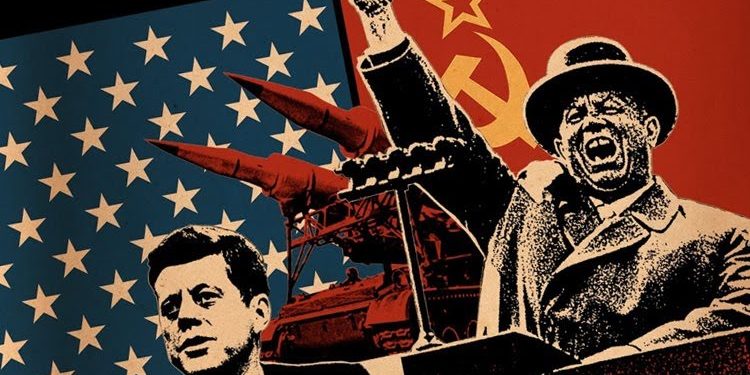
The crisis passed because U.S. president John F. Kennedy, below left, and Soviet Union president Nikita Khrushchev, below right, engaged in crisis diplomacy and negotiated a solution to the problem of the Soviets installing nuclear missiles in Cuba.

We are not bereft of key ideas and high-level persons to find creative ways to end the present carnage in Ukraine. The Cuban Missile Crisis ended because John F. Kennedy and Nikita Khrushchev took a risk with crisis diplomacy. Can Joe Biden and Vladimir Putin take a similar risk for peace? Canada should push diplomacy, not arms, to end the Ukraine war.

EDMONTON—The possibility of Russia’s use of nuclear weapons in the Ukraine war has led to comparisons with the Cuban Missile Crisis 60 years ago this month, in which, for 13 days, humanity stood on the brink of World War III.

The crisis passed because U.S. president John F. Kennedy and Soviet Union president Nikita Khrushchev engaged in crisis diplomacy and negotiated a solution to the problem of the Soviets installing nuclear missiles in Cuba. But negotiations today to end the Ukraine war seem farthest from the minds of the Western leaders and Russian President Vladimir Putin, let alone Ukraine’s President Volodymyr Zelenskyy. For Canada’s part, the word “negotiations” does not escape the lips of Prime Minister Justin Trudeau or Foreign Minister Mélanie Joly. The G7, which includes Canada, has just signed on for more weapons to be sent to Ukraine.

I am undoubtedly speaking against a headwind when I call for Canada to support the creation of an international commission, composed of eminent figures, to reach beyond the clamour and hubris engaged in by both the West and Russia to deal with the practical realities of the Ukraine war. The essential reality is to stop the war before it escalates into World War III.

The history of the Cuban Missile Crisis should be a guide. Here is what happened in the momentous days, Oct. 16-29, 1962.

The Cuban crisis arose when the U.S. discovered—on the basis of aerial surveillance photos—that the Soviets were installing nuclear missiles in Cuba.

Kennedy imposed a naval quarantine around Cuba to stop Soviet ships carrying nuclear missiles for further installation. But for some of the president’s advisers, that was not enough: they wanted a full-scale invasion or bombing of Cuba. Kennedy feared such action would launch World War III with both Moscow and Washington using nuclear weapons against each other.

Tensions throughout the world ran sky-high in what was quickly recognized as the greatest atomic bomb threat since Hiroshima and Nagasaki. On the eighth day of the crisis, UN Secretary-General U Thant sent an urgent message to Khrushchev and Kennedy, appealing for a moratorium to halt further military action. Suddenly, Kennedy saw a way for the Soviets to stop their shipments without looking like they had capitulated to the U.S. He responded to U Thant and asked him to send a second message to Khrushchev, stating that if the Soviets would hold up shipments, the U.S. “would be glad to get into conversations about how the situation could be adjusted.”

U Thant picked up the signal and sent a second message to both leaders, asking Khrushchev to instruct Soviet vessels to stay away from the quarantine area, and asking Kennedy to instruct U.S. vessels to avoid direct confrontation with Soviet ships. To both leaders, he stated: “This would permit discussions of the modalities of a possible agreement which could settle the problem peacefully.”

The crisis ended a few days later when Khrushchev agreed to verifiably remove his missiles from Cuba in return for a U.S. non-invasion pledge. There was also a deal, kept secret at the time, in which Kennedy agreed to de-commission aging U.S. Jupiter missiles from Turkey six months later.

When it was over, the U.S. and Soviet governments sent a letter to U Thant expressing, in diplomatic understatement, “appreciation for your efforts in assisting our governments to avert the serious threat to peace, which recently arose in the Caribbean area.” Kennedy added his own note of praise: “U Thant has put the world deeply in his debt.” Publicly, the Americans took the credit for ending the crisis. U Thant, never a showman, returned to his duties.

Should the 1962 lesson of “crisis diplomacy” be applied today? The answer is yes. And the need is urgent. U.S. President Joe Biden has warned the world could face “Armageddon” if Putin uses a tactical nuclear weapon to try to win the war.

Some argue that a comparison of the Ukraine war to the Cuban Missile Crisis is invalid because it’s too late: Russia has already invaded Ukraine causing horrendous suffering; Ukraine has counter-attacked and Russia has responded with more shelling and deaths. The militarists argue that Russia must be defeated; vengeance must be obtained. This mantra has closed the minds of the West to negotiations. But if the war continues— with or without nuclear weapons—it will soon be NATO vs. Russia, and that will indeed become World War III.

Putin’s military doctrine has always been “escalate to de-escalate.” I think he is actually getting ready to negotiate because he now realizes that NATO, the growing military alliance which he saw as a threat to Russian imperialism, is more strongly determined than ever to stop him.

What is there to negotiate? My colleague Ernie Regehr, author of Disarming Conflict: Why Peace Cannot Be Won on the Battlefield, argues that intensified diplomacy “in pursuit of mutually acceptable security arrangements” is in the interests of both Russia and Ukraine.

Mexican President Andrés Manuel López Obrador, has called for a high-level “commission for dialogue and peace,” led by UN Secretary-General António Guterres, Pope Francis, and Indian Prime Minister Narendra Modi.

We are not bereft of key ideas and high-level persons to find creative ways to end the present carnage. The Cuban Missile Crisis ended because Kennedy and Khrushchev took a risk with crisis diplomacy. Can Biden and Putin take a similar risk for peace? Canada should push diplomacy, not arms, to end the Ukraine war.

(The Hill Times)

Former Senator Douglas Roche is the author of The Human Right to Peace.


Canada needs to give more support to UN’s new Agenda for Peace

By Douglas Roche |  September 22 2022

Russia won’t stop its aggression. NATO-backed Ukraine won’t cease its counter-offensive. The threat of nuclear conflict is growing. Unspeakable brutalities are discovered every day. Everybody wants to curse the darkness. But there is one candle of hope. UN Secretary General Antonio Gutérres is currently preparing a paper, ‘A New Agenda for Peace,’ which will be published next year as part of the run-up to the UN Summit for the Future in 2024. Give the man credit for at least trying to build an agenda that prevents future wars, writes Douglas Roche.

EDMONTON—If good speeches at the UN—which fill the air this week at the United Nations General Assembly’s annual debate—could save the world, we’d all be in bliss. Unfortunately, good speeches can’t stop the Ukraine war, which has now reached a point of maximum danger for humanity. Russia won’t stop its aggression. NATO-backed Ukraine won’t cease its counter-offensive. The threat of nuclear conflict is growing. Unspeakable brutalities are discovered every day. Everybody wants to curse the darkness. But there is one candle of hope.

Right now, the major powers in the UN Security Council are running over the UN, cynically disregarding their legal obligations to maintain international peace and security. They consider the UN useful in providing humanitarian aid to the victims of conflicts, but have stripped it of its enforcement powers to stop wars.

The institutional breakdown of the UN Security Council, caused by the five permanent members, who selfishly put their own interests ahead of the good of humanity, is a chief reason for the disrespect all institutions are enduring today. The crisis of disrespect for law the world over has led to the present doleful situation in which politicians merely wring their hands at the senseless war started by Russia.

Guterres can’t haul the big powers into court. But he can look into the near future and identify ways to strengthen crisis management and build the conditions for peace. That’s what his “New Agenda for Peace” will address.

This is not the first time such an agenda has been attempted at the UN. In 1992, in the immediate aftermath of the Cold War, the UN secretary general at the time, Boutros Boutros-Ghali, published “An Agenda for Peace,” which listed measures for conflict prevention. Boutros-Ghali wanted a $50-million peacekeeping reserve fund, a $50-million humanitarian revolving fund for emergency assistance, and a $1 billion peace endowment fund. He wanted to pay for this through a levy on arms sales and a tax on international air travel (which is dependent on the maintenance of peace). Apparently, he reached too far, for his proposals were sidelined. Some of his ideas, however, gradually found their way into UN peace-building initiatives.

Now, three decades later, the world is truly frightened by the consequences of the latest eruption of war. “I think we are all concerned that if [Putin] is pushed to the edge, he might respond in what you would consider a horrific way, making use of a weapon of mass destruction,” Rose Gottemoeller, NATO‘s former deputy secretary-general, not known as an alarmist, said. Even China’s leader Xi Jinping and India’s prime minister Narenda Modi have signalled their concern at escalating warfare.

But is this concern deep enough to move world leaders to support Guterres’ efforts to develop a new agenda with any teeth in it? The General Assembly is currently considering how far the new document can go beyond merely setting out benchmarks to measure the risks of inter-state warfare. The International Crisis Group, an independent civil society organization working to prevent war, wants Guterres to adopt a broad definition of “strategic risks,” which would not only reduce the nuclear danger but also address the sources of instability in the Global South, such as the proliferation of small arms, inequality, global warming, and the challenges poorer states face in delivering basic services to their citizens.

This is precisely the moment to advance the concept of common security—the idea that nations and populations can only feel safe when their counterparts feel safe. This was first proposed during the Cold war by an international commission headed by Olof Palme, a former Swedish prime minister, who insisted, “International Security must rest on a commitment to joint survival rather than a threat of mutual destruction.” This is not as easy as it sounds.

Common security counters the military doctrine of nuclear deterrence, which all the permanent members of the UN Security Council live by. Nuclear deterrence is responsible for the continued nuclear arms race, the source of so much tension in the world. If the major countries were really serious about building peace, they would negotiate away their nuclear arsenals. They won’t do this, as the recent Non-Proliferation Treaty Review Conference showed.

Thus Guterres is stymied. He can go only so far in projecting his new agenda. I think he should aim for the support of the middle power countries in challenging the major states’ war policies.

Here Canada has a special role to play in backing Guterres’ efforts. Right now, we’re following NATO’s insistence on Western military dominance. That is not the route to common security. Canada needs to give more support to the UN’s New Agenda for Peace rather than adhering so closely to NATO’s plans to keep fighting the Ukraine war. We need to build hope for peace through new thinking.

Douglas Roche is a former Canadian Senator and author.
The Hill Times  |  Hon. Douglas Roche, O.C.

Influx of women into nuclear disarmament gives us hope, unless they work for a NATO country

The women who make and present Canadian policy on nuclear disarmament stick to soft truisms and shun the bold actions called for by UN Secretary-General Antonio Guterres, who opened the conference, warning: ‘Humanity is just one misunderstanding, one miscalculation away from nuclear annihilation,’ writes Douglas Roche.

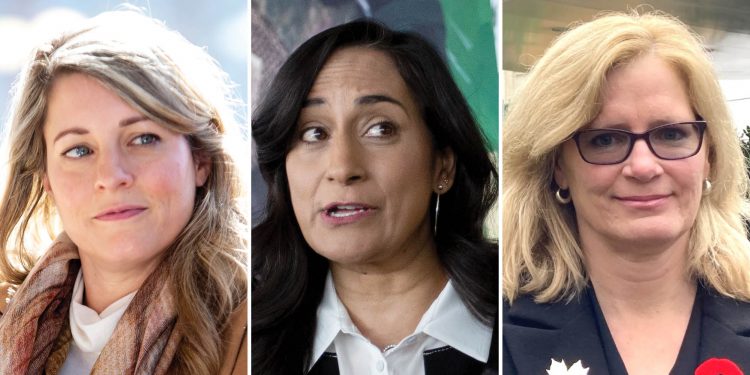
Foreign Affairs Minister Mélanie Joly, left, Defence Minister Anita Anand, and Canadian Ambassador Leslie Norton. Despite the enormous danger to the world from the aggressive nuclear modernization programs of the nuclear powers, who intend to spend billions of dollars to retain their nuclear arsenals for the rest of this century, the Canadian government still refuses to support comprehensive, time-bound negotiations for the elimination of nuclear weapons, writes Douglas Roche.

The Hill Times photographs are by Andrew Meade, by courtesy of Flickr, and by Wikimedia Commons.

EDMONTON—At 10 a.m. on Aug. 4, the fourth day of the month-long Non-Proliferation Treaty (NPT) Review Conference, Canadian Ambassador Leslie Norton stepped to the green marble podium of the UN General Assembly in New York and delivered a speech on behalf of 67 nations. A maple leaf broach emblazoned on her jacket, the ambassador called for “the full, equal, and meaningful participation of women across all disarmament processes.”

Improving gender diversity and “mainstreaming” gender perspectives into nuclear policy-making will strengthen the treaty process, she said. I believe this to be true as a general statement, but Ambassador Norton, who has had an admirable diplomatic career in humanitarian issues, unwittingly invited a spotlight on the performance of Canadian women officials working on nuclear disarmament. What the spotlight reveals is not complimentary.

In 2017, Chrystia Freeland, then foreign minister, proclaimed a feminist foreign policy, asserting that the world would be a safer place through the promotion of feminism, affirming the rights of women and girls, and particularly involving women as participants in the development of the human security agenda. This was followed up by the introduction of the Feminist International Assistance Policy. Canada became a world leader in advancing the interests of women in achieving peace and security.

This brought Ambassador Norton to the forefront at the NPT conference. Norton is by no means a singular female in the Canadian security policy arena. In addition to the foreign minister, Mélanie Joly, and the defence minister, Anita Anand, the three top security officials at Global Affairs Canada are all women.

Criticizing the performance of Canadian women in high positions in the Government of Canada is a risky thing for an older man such as myself to do, especially since I believe women generally bring a more humane understanding to the catastrophic humanitarian consequences of nuclear warfare than men do.

The International Campaign to Abolish Nuclear Weapons, which won the Nobel Peace Prize for its catalytic work in developing the Treaty on the Prohibition of Nuclear Weapons, is run mostly by women. A young woman from Ukraine, Yelyzaveta Khodorovska, gave an outstanding speech at the NPT conference condemning nuclear deterrence policies. The Irish minister of state, Hildegarde Naughton, criticized both the U.S. and Iran for their conduct, which has led to a breakdown in the international agreement ensuring Iran does not acquire nuclear weapons. The most penetrating analyses of the complicated NPT process were done by two women, Ray Acheson and Allison Pytlak, of the Women’s International League for Peace and Freedom.

But the women who make and present Canadian policy on nuclear disarmament stick to soft truisms and shun the bold actions called for by UN Secretary-General Antonio Guterres, who opened the conference, warning:“Humanity is just one misunderstanding, one miscalculation away from nuclear annihilation.” Despite the enormous danger to the world from the aggressive nuclear modernization programs of the nuclear powers, who intend to spend billions of dollars to retain their nuclear arsenals for the rest of this century, the Canadian government still refuses to support comprehensive, time-bound negotiations for the elimination of nuclear weapons.

It’s worse than that. Foreign Minister Joly didn’t even show up at the NPT conference, which was attended by Japanese Prime Minister Fumio Kishida, U.S. Secretary of State Antony Blinken, and Swedish Foreign Minister Ann Christin Linde, to name but a few of the luminaries of the 191 states belonging to the NPT.

It cannot be said that the Canadian women officials I have named do not care about nuclear disarmament. But the policies they are carrying out are no different from those of their male predecessors. In other words, they have not broken out of the outmoded, and wrong-headed, nuclear weapons policies of NATO, whose spokesperson—a woman—had the effrontery to go before the NPT conference and once again oppose the Prohibition Treaty, which has so far been ratified by 66 states. When NATO speaks, Canada—male or female—goes mute.

A recent Oxford International Affairs study (written by two women, Laura Rose Brown and Laura Considine), made the ironic point that Canada, while professing the values of a feminist foreign policy, is nonetheless committed to NATO’s nuclear deterrence policies. The authors write: “The question of whether a gender-sensitive approach can fit into a nuclear policy space whose core institutions rely on an acceptance of the practice of nuclear deterrence, and if so how, is one that has so far been avoided.”

Let it not be said that Canada is doing nothing for nuclear disarmament. The Canadian speeches, in the early rounds of the conference, drew attention to Canada’s ongoing work in three groupings of states: the Stockholm Initiative, which provides a pathway of “stepping stones” to advance nuclear disarmament; the Non-Proliferation and Disarmament Initiative, which poses measures to reduce the risks of nuclear weapons; the Vienna Group of 10, which deals with the peaceful use of nuclear energy. None of these groups, however, addresses the outright delegitimization of nuclear weapons, as the Prohibition Treaty does, nor do they even dare to call out the U.S.for maintaining tactical nuclear weapons on the soil of five European countries, a constant violation of the goals of the NPT.

The Hill Times | Hon. Douglas Roche, O.C. | www.douglasroche.ca

Canada’s absence at nuclear prohibition treaty meeting a disappointment

Hill Times | June 27, 2022

Canada has gone missing just at the moment the International Committee of the Red Cross told the meeting: ‘The continued existence of nuclear weapons is one of the biggest threats to humanity.’

EDMONTON: Sadness best describes my feelings about Canada not showing up at the first meeting of states parties to the Treaty on the Prohibition of Nuclear Weapons held June 21-23 in Vienna. It is utterly sad that a country which once led the way in telling the nuclear powers to cool down the arms race, which once stood up against NATO’s nuclear weapons policies, which once pioneered the Landmines Treaty, wouldn’t even attend as an observer a meeting that solidified the Prohibition Treaty as a permanent instrument to protect humanity against annihilation.

Canada has gone missing just at the moment the International Committee of the Red Cross told the meeting: “The continued existence of nuclear weapons is one of the biggest threats to humanity.” UN Secretary-General António Guterres said: “Let’s eliminate these weapons before they eliminate us. … We must stop knocking at doomsday’s door.”

The Prohibition Treaty, which outlaws the possession of nuclear weapons, came into existence in 2017, but it was immediately challenged by the powerful nuclear weapons states whose modernization programs of the existing 13,000 nuclear weapons belie their previous commitments to eliminate their nuclear arsenals

NATO took an aggressive stance against the Prohibition Treaty and warned its members away from it. Canada fell into line with NATO and even rebuffed the personal invitation to attend extended by Ambassador Alexander Kmentt of Austria, president of the Prohibition Treaty meeting. However, the governments of four other NATO countries, including Germany, the Netherlands, Norway and Belgium, did choose to attend, which at least showed a willingness to engage in the discussions on this historic treaty; their positive act exposed the timid nature of the present government of Canada.

Foreign Affairs Minister Mélanie Joly has showed no interest in nuclear disarmament. No wonder Canada cannot get elected to the UN Security Council, writes Douglas Roche.

An array of distinguished Canadians pleaded with Global Affairs Canada to send a delegate, but the top officials who, in the same week sent a representative to a cocktail party at the Russian Embassy in Ottawa, said no. Foreign Affairs Minister Mélanie Joly has inexplicably displayed no interest in nuclear disarmament—a subject now at the forefront of world affairs given Russian President Vladimir Putin’s threat to use nuclear weapons in the Ukraine war.

No wonder Canada didn’t get elected to the UN Security Council. The collapse of values in Canada’s foreign policy as shown by the shunning of UN peacekeeping, the government’s disdain for the 122 countries that voted for the Prohibition Treaty, and its slavish adherence to the resurgent militarism of NATO all reveal the low level of thinking in the Pearson Building about the human security agenda. Sad, indeed.

What did Canada miss at the Prohibition Treaty meeting?

It missed a profound discussion of the present most dangerous threat of the use of nuclear weapons since the Cuban Missile Crisis 60 years ago; the establishment of new processes of co-ordination among states to alleviate the harmful health and environmental effects of nuclear weapons; the development of a Scientific Advisory Group to form a network of experts around the world to support the goals of the Prohibition Treaty to rid the world of nuclear weapons in the foreseeable future.

Not least among the accomplishments of the meeting was the naming of Ireland to explore ways for the Prohibition Treaty to co-operate with the Non-Proliferation Treaty. This is far more than a bureaucratic transaction. The nuclear weapons states have justified their rejection of the Prohibition Treaty by claiming that the NPT, comprising most of the states of the world, is the only legitimate forum for negotiating the elimination of nuclear weapons. The problem with this argument is that the NPT, in its 50 years, has never launched such comprehensive negotiations because of the obduracy of the nuclear weapons states. Thus, the Prohibition Treaty was born out of the frustration with the NPT process. Far from setting itself apart from the NPT, the Prohibition leaders reaffirmed that the NPT is the “cornerstone” of nuclear disarmament.

Ireland is the perfect state to bring these two treaties into working collaboration, for Ireland has been widely regarded as the “father” of the NPT and also played an active role in creating the Prohibition Treaty. Canada would be well advised to go onto immediate consultations with Ireland to see how the present aloofness between the leaders of these two treaties can be overcome for the sake of deepening global cooperation for the elimination of nuclear weapons. A positive turnaround in Canada’s attitude in cooperating with states that really want to achieve nuclear disarmament would help to overcome the shame of its present evasiveness.

There is still much hostility to be overcome between NATO and the Prohibition Treaty. Germany, the Netherlands and Norway all used their position as “observers” at the Prohibition meeting to defend NATO’s stance as a nuclear alliance. They insisted they would not join the Prohibition Treaty. But the Vienna meeting answered these critics: “We regret and are deeply concerned that despite the terrible risks, and despite their legal obligations and political commitments to disarm, none of the nuclear-armed states and their allies under the nuclear umbrella are taking any serious steps to reduce their reliance on nuclear weapons.” This statement applies directly to Canada.

A striking note of the Vienna meeting was the participation of civil society led by the Nobel Peace Prize-winning International Campaign to Abolish Nuclear Weapons, which now comprises 645 chapters around the world. The Prohibition Treaty has integrated civil society into its future work, a collaboration that is surely deepening the input of highly knowledgeable and deeply committed people into governmental decision-making on the future of humanity.

Former Senator Douglas Roche, author of Beyond Hiroshima, chaired the UN Disarmament Committee in 1988.

War in Ukraine has placed the West at a crossroads: pursue war or peace?

Human security today does not come from the barrel of a gun; it comes from preventive planning. As a middle power, Canada should encourage its NATO allies to think about a better way to build global security.

The Hill Times, 21 March 2022

EDMONTON: It’s a safe bet Canada’s defence spending will get a huge boost in the federal budget soon to be presented to Parliament. Defence Minister Anita Anand, reeling from the demands of the Ukraine war, is openly campaigning for more money and will present “aggressive options” to boost spending to cabinet.

The NATO leadership is demanding more resources, and Canada is made to feel like a laggard because the $22-billion we’re already spending annually on defence falls short of NATO’s magic number of two per cent of GDP (Canada is at 1.39 per cent).

Once again, the powerful voices calling for more money for the military have far more resonance in the media and Parliament than those advocating stronger political and economic measures to build the conditions for peace.

Clearly, the present political system that relies so heavily on seeking peace through military strength has failed—again—tragically, as the heart-wrenching photos of innocent people slaughtered and uprooted in Ukraine show.

Of course, the Russian invasion must be repelled, but the failed political system that led to the Ukraine disaster must be exposed. The suffering in Ukraine has touched a raw nerve in the West. Will we learn from this terrible experience?

Read more

Putin has shown, in a demented and terrifying way, why the possession of nuclear weapons must be outlawed now

The Government of Canada is sending more arms to Ukraine. That is an attempt to tell the brave people of Ukraine that we are with them in their fight against tyranny. Our concern for Ukraine would go to a higher level if Canada implemented a plan to remove the nuclear cloud from over their heads—a cloud that is swirling around everyone in the world today.

EDMONTON– It’s no longer postponable. Russian President Vladimir Putin has shown, in a demented and terrifying way, why the possession of nuclear weapons must be outlawed now.

Far from closing down the little that remains of nuclear disarmament agreements because of the Russian invasion of Ukraine, this seminal moment in the history of the 21st century must be seized.

The contradictions in Canada’s nuclear disarmament policies have got to be fixed. Sand castles won’t stop a tsunami. We and our NATO partners can no longer go on professing a desire for an end to nuclear weapons while supporting the military doctrine of nuclear deterrence, which leads to even more than the present 13,000 nuclear weapons.

Putin jolted the world when he warned the West of “consequences greater than you have faced in history” for any interference in his invasion, and then ordered Russian nuclear forces to be placed on high alert. Suddenly a light went on in people’s minds: “You mean, those things could actually be used?”

Throughout the post-Cold War years, people—and governments—have become lackadaisical that these horrendous instruments of warfare that once destroyed Hiroshima and Nagasaki could ever actually be used again. Putin raised this spectre anew.

Read more

Don’t let finger-pointing doom this key treaty against bioweapons

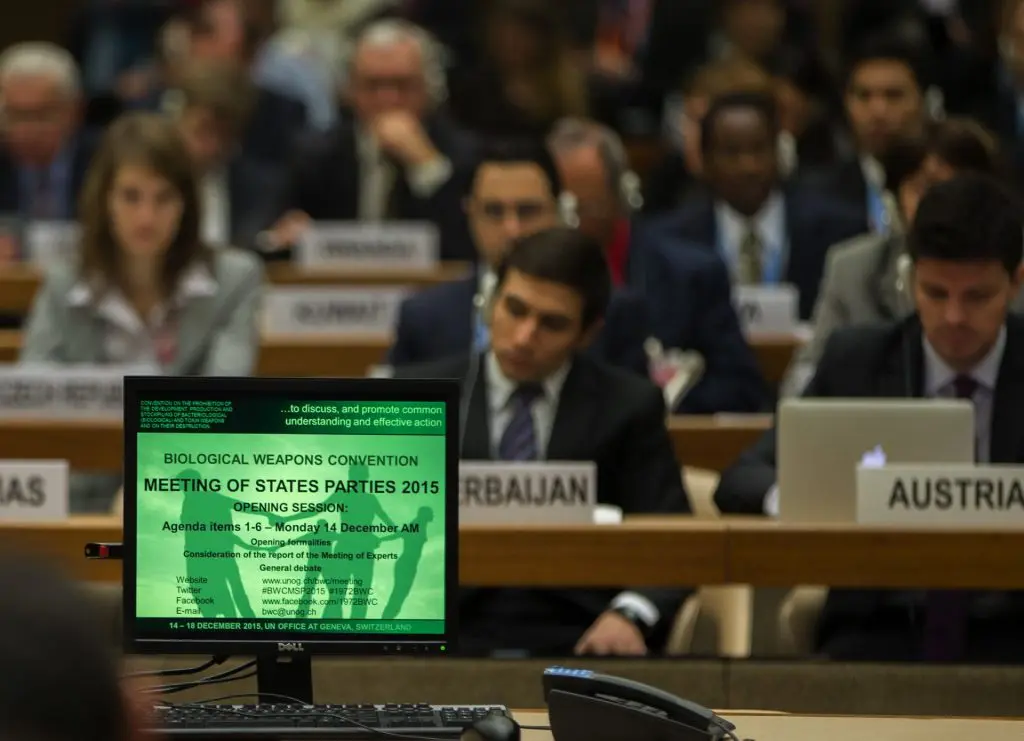
Representatives to the Biological Weapons Convention, 2015
Representatives to the Biological Weapons Convention, the international treaty banning bioweapons activity, meet in 2015. Credit: Eric Bridiers/US Mission Geneva. CC BY-ND 2.0.

When the US State Department accused Russia of maintaining a biological weapons program last year, officials were putting concerns they had been harboring for years squarely on the record. Meanwhile Russia and China have been accusing US partnerships in Ukraine, other former Soviet republics, and elsewhere of being fronts for nefarious biological activities or bioweapons programs. For some 50 years, the Biological Weapons Convention has been the bulwark stopping countries from including these arms in arsenals and war plans, but some experts warn there is a new interest in the weapons or even a budding biological arms race.

Few doubt that the Biological Weapons Convention is languishing at a critical time. Major world powers are accusing each other of maintaining bioweapons programs and the fast pace of the global scientific enterprise is making it harder for countries to find balance between technological advances and risky biological research. Meanwhile, efforts to strengthen the convention have been in a holding pattern for over 20 years since the United States scuttled negotiations meant to give the treaty a means of verifying compliance. It’s now generally very hard to get anything done at treaty meetings.

The world needs a stronger Biological Weapons Convention more than ever, and this summer, when states meet to review the treaty, the prospects for making progress on issues like compliance, transparency, cooperation and verification are better than they have been for over a decade, if acrimony over bioweapons claims, for starters, doesn’t get in the way.

Read more

EN / FR