Featured

ND4 Letter to Prime Minister Carney: Appeal for Action toward Nuclear Abolition

The ND4 are four prominent Canadian nuclear weapons abolition groups: Canadian Pugwash Group, Canadian Leadership for Nuclear Disarmament, Project Ploughshares, and Canadian Network to Abolish Nuclear Weapons.

November. 18, 2025

The Right Honourable Mark Carney
Prime Minister
House of Commons
Ottawa, Canada

Dear Prime Minister Carney,

RE:  Appeal for Action toward Nuclear Abolition

We are a group of nineteen Canadian NGOs active in the field of international security and disarmament.  Having just concluded a roundtable in Ottawa on October 23 under the title “Advancing Nuclear Disarmament in a Chaotic World”, we wanted to share with your government some of the prominent themes and proposals for action that emerged from the discussion.

No one would dispute that we are experiencing a turbulent time in international affairs with long standing norms for responsible state behaviour being eroded and, in some cases, openly flouted. A dangerous arms race dynamic is underway amongst rival powers and the norm of nuclear non-proliferation is under great stress. The proponents of nuclear weapons are ascendent and the supporters of nuclear restraint and disarmament are struggling to have their voice heard.

It is all the more crucial therefore during this period of great power competition for middle powers such as Canada to exert a moderating influence and work to reinforce the multilateral system and the rule of law. The following are a few proposals for Canada to consider championing as we collectively navigate the treacherous waters ahead.

A key near term goal is to help ensure a successful eleventh review conference of the Nuclear Non-proliferation Treaty (NPT) which will be held in April/May of next year. The NPT has often been described as the “cornerstone” of the global nuclear non-proliferation and disarmament regime. After two consecutive review conferences have failed to agree outcome documents (2015 and 2022) much is at stake for demonstrating a significant collective result from the gathering next spring. Canada in concert with the Nuclear Non-proliferation and Disarmament Initiative (NPDI), a grouping of non-nuclear weapon states, has pressed for an enhanced transparency and accountability procedure to be applied to the nuclear weapon states’ obligation to nuclear disarmament under Article VI of the treaty. The five nuclear weapon states have consistently ignored this proposal. The vast majority of NPT members cannot allow their rightful demand for accountability to be brushed aside again. We suggest that Canada in concert with like-minded states make acceptance of the transparency and accountability plan a sine qua non for agreeing to any outcome document from the review conference.

Within NATO we would encourage the government to promote the adoption by the Alliance of a “No First Use” doctrine. Such a policy adjustment would sharply restrict any consideration of use of nuclear weapons if the Alliance was attacked. Given its massive conventional military superiority NATO must avoid threatening a nuclear response to non-nuclear attacks against its members. By curtailing the scope of its nuclear deterrent, the Alliance would be fulfilling the NPT obligation from the 2000 review conference to reduce the saliency of nuclear weapons in security policies and help stem the pressure on the crucial norm of nuclear non-proliferation that current actions (e.g. Russia’s aggression against Ukraine) have created.

A treaty covering the fissile material essential for nuclear weapons has been an agreed objective of the international community for decades, but to date no actual negotiations have been initiated. This has been a result of the treaty being traditionally assigned to the 65 nation Conference on Disarmament in Geneva. The CD however is a moribund forum not having been able to agree and implement a program of work for over a quarter of a century. Canada has had a proud history as a leader in the effort to conclude a treaty banning the production of fissile material for nuclear weapons. It is time however for Canada alongside other friends of the treaty to delink this negotiation from the CD and seek to authorize the commencement of negotiations via a resolution of the UN General Assembly that would not be subject to a veto.

President Trump in January of this year announced an ambitious Golden Dome” project that would ostensibly protect the United States from all types of missiles from all corners of the globe. In our view, “Golden Dome” in its strategic ballistic missile defence aspect is a seriously problematic proposal. On the grounds of feasibility, effectiveness, cost and the risk of incentivizing a nuclear arms race the scheme should be dismissed. Moreover, its planned deployment of space-based interceptors would also obliterate the non-weaponization of outer space a long-standing position of successive Canadian governments. We urge the government to continue only with the existing plans for NORAD modernization in cooperation with the United States and stay well clear of the more fanciful aspects of the project which would represent a financial “black hole” for our limited defence resources.

Finally, we would like to encourage the government to remain active in efforts to reform the UNs disarmament machinery. The abuse of the consensus rule has led to the wishes of the vast majority of member states being stymied by the opposition of a few. The trend of the General Assembly to adopt ever more declaratory resolutions, despite their repetitive nature, rather than authorize relevant action needs to be curbed. We applaud the calls for reform contained in the Canadian statement to UNGA’s First Committee on Disarmament and International Security and offer the government our support in carrying these reform efforts forward.

We convey the above suggestions for priority action as part of Canada’s foreign and security policy with respect and in anticipation of receiving your reaction to them. We remain at the disposal of your ministers and officials for further discussion of these ideas.

Sincerely yours,

Earl Turcotte, Chairperson, Canadian Network to Abolish Nuclear Weapons (a group of 18 national and regional organizations)
Cesar Jaramillo, Chairperson, Canadian Pugwash Group
Alex Neve O.C., Chairperson, Canadian Leadership for Nuclear Disarmament
Branka Marijan, Interim Executive Director, Project Ploughshares
 

Featured

CPG-CIPS Conference: Canadian Security Interests and Trump 2.0

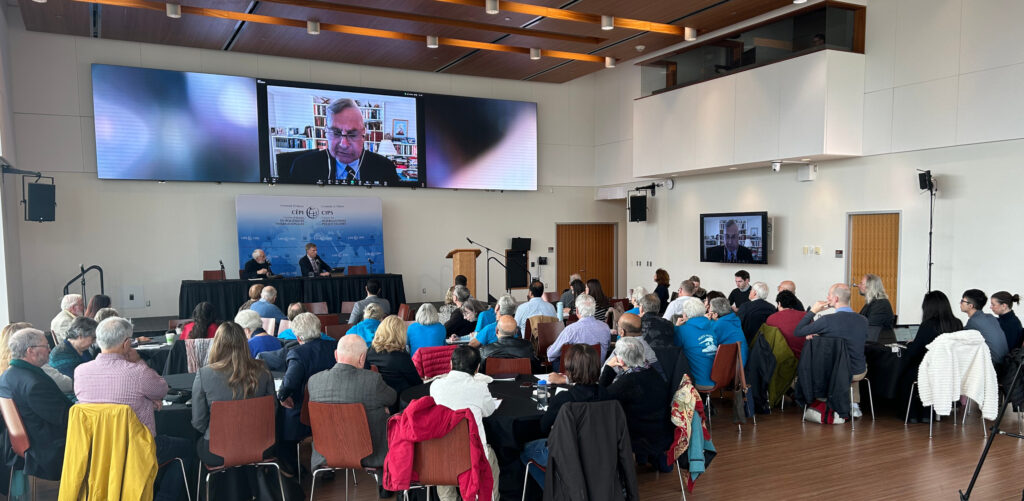
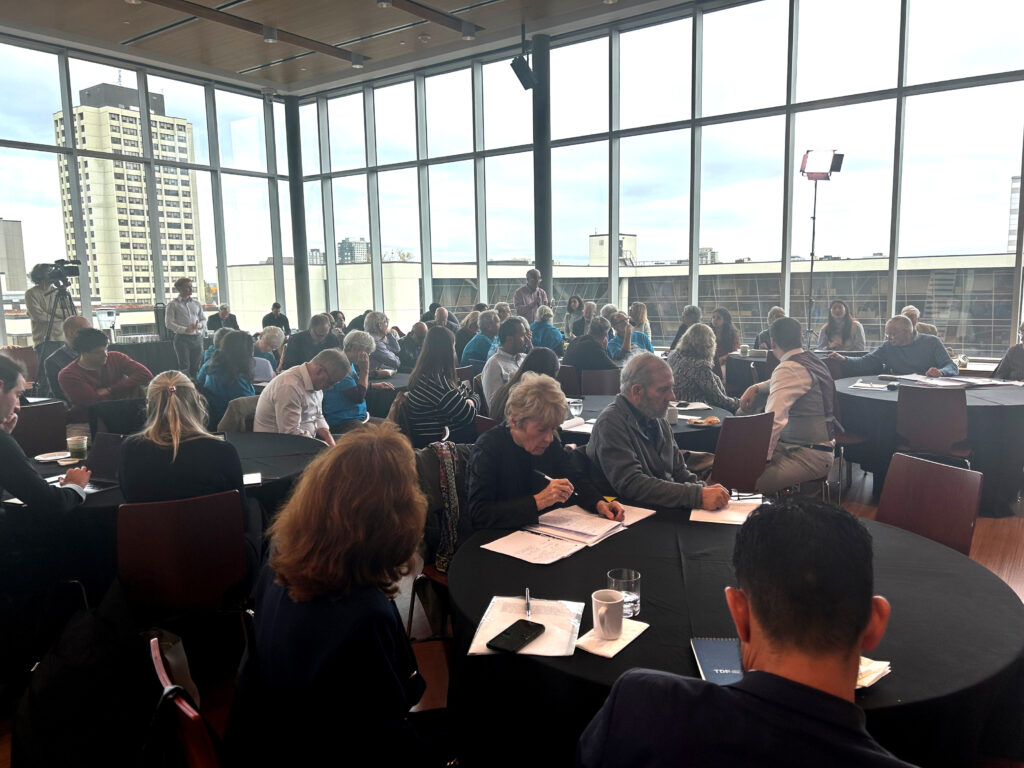
Canadian Security Interests and Trump 2.0 was a partnership event between Canadian Pugwash Group and the Centre for International Policy Studies at the University of Ottawa. The Outer Space Institute was also a participant.

Event Date: October 24, 2025 – 9:00am to 5:15pm
Location: FSS 4007 and online, 120 University Private, University of Ottawa

The conference featured Canadian experts addressing the following topics. Recordings are linked below:

Panel 6: “Opportunities for Canadian Security Diplomacy in a Turbulent World”


Program

9:00am-9:30am – Introductory Remarks

  • Alexandra Gheciu & Cesar Jaramillo

9:30am-10:30am – Panel 1: “Canada and US Security and Defence Cooperation”

  • Speakers: Joel Sokolsky & Walter Dorn

10:30am-10:45am – Coffee Break

10:45am-11:45am – Panel 2: “Arctic Security, NORAD modernization and Golden Dome”

  • Speakers: Ernie Regehr & Michael Byers

11:45am-12:45pm – Panel 3: “Canadian Multilateralism vs American Unilateralism”

  • Speakers: Peggy Mason & David Carment

12:45pm-2:00pm – LUNCH

2:00pm-3:00pm – Panel 4: “Nuclear Weapons vs Nuclear Arms Control and Disarmament”

  • Speakers: Matt Korda & Cesar Jaramillo

3:00pm-3:15pm – Coffee Break

3:15pm-4:15pm – Panel 5: “Weaponization of Cyberspace and AI Risks”

  • Speakers: Branka Marijan & Paul Meyer

4:15pm-5:15pm – Panel 6: “Opportunities for Canadian Security Diplomacy in a Turbulent World”

  • Speakers: Kerry Buck & Martin Larose


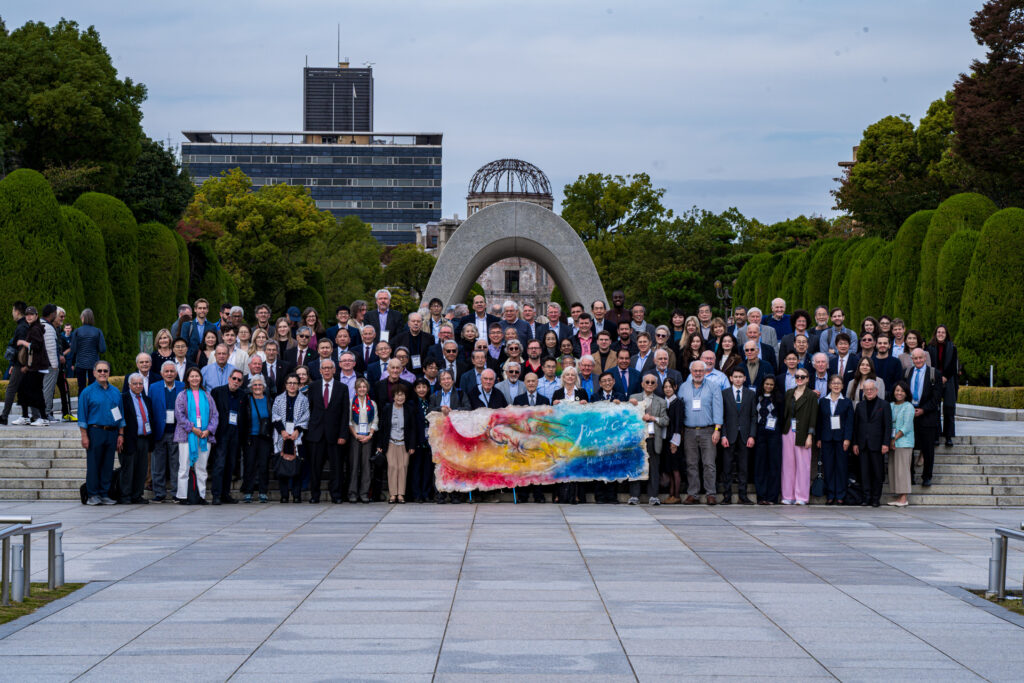
Canadian Pugwash in Hiroshima: “Time for Peace, Dialogue and Nuclear Disarmament”

Canadian Pugwash participation was in evidence at the 63rd Pugwash Conference on Science and World Affairs in Hiroshima, Japan. Four Canadians were present: CPG Chair Cesar Jaramillo, Director Paul Meyer, Jennifer Simons and (student-youth Pugwash member) Vivienne Zhang.

The Conference commemorated the 80th anniversary of the atomic bombings, as well as the 70th anniversary of the Russell-Einstein Manifesto,  and the 30th anniversary of the Nobel Peace Prize to Sir Joseph Rotblat and Pugwash Conferences on Science and World Affairs. The 63rd Pugwash Conference sent a strong message to the world: No more Hiroshimas. No more Nagasakis. No more war.

The Declaration released, entitled “80 Years After the Atomic Bombing, Time for Peace, Dialogue and Nuclear Disarmament” states in part:

“From Hiroshima, we affirm with conviction that nuclear weapons must never be used again, under any circumstances, since a nuclear war could destroy not only nations but the future of humankind itself. The bombings of Hiroshima and Nagasaki were not only tragedies of war but represent enduring moral ruptures in the conscience of humankind. If such a future is to be averted, dialogue must replace confrontation. The Pugwash movement was founded on “dialogue across divides,” and history shows that even in times of deep hostility, such dialogue has made disarmament possible.”

Our colleague, and CPG Chair, Cesar Jaramillo delivered two presentations: “NPT at the breaking point: Seven fault lines for the 2026 RevCon”  and “Self-Defence and IHL: Reconciling Necessity and Restraint in the Middle East“.

CPG Director Paul Meyer chaired a plenary session on “Practical Steps and Instruments for Nuclear Disarmament” and was a speaker on a plenary panel on “Disruptive Technologies and Nuclear Weapons”. His remarks for this plenary panel as well as a presentation on outer space for the working group are linked.

Our colleague Dr. Jennifer Simons, who is on the (International) Pugwash Council, was a major funder of the conference, and also spoke.

The conference working groups also released their subject area reports, all linked below:

Report of Working Group 1: Nuclear Disarmament and the Future of Arms Control
Report of Working Group 2: Nuclear Energy and Non-Proliferation
Report of Working Group 3: Asia-Pacific and Nuclear Weapons
Report of Working Group 4: Conflict and WMD in the Middle East
Report of Working Group 5: European Security
Report of Working Group 6: Emerging Technologies and their Implication for Conflict


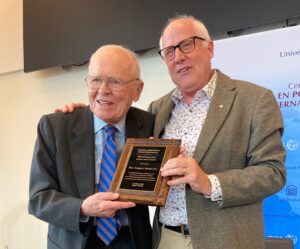
2025 Distinguished Achievement Award presented to the Hon. Douglas Roche O.C.

Photo (at left) of presentation of award by Alex Neve O.C., Chairperson, Canadian Leadership for Nuclear Disarmament to the Hon. Douglas J. Roche O.C. on October 23, 2025.
The video of this presentation and  the lecture by Doug Roche can be found: here 
“I was 16 when the atomic bombs were used against Hiroshima and Nagasaki. I remember Gandhi, Churchill and JFK. I was first elected to Parliament a few days before Lester Pearson died and sat in the House of Commons a few rows behind John Diefenbaker. I’ve been through Trudeau, twice. Joe Clark, Brian Mulroney and Jean Chrétien all deeply affected the course of my life. I’m not much attached to politics these days, but I’m here. Perhaps I’m still hanging around because I love this beautiful and troubled planet so much and am not in a particular hurry to leave it.”
‘This theme of common security became, and stayed, the central tenet of my political life even though the major governments cast cooperation aside in the post- 9/11 world. The 1990s presented a golden moment to solidify a peace dividend for the world. But it never happened. NATO began its fateful expansion. The military-industrial complex, which President Eisenhower had first warned about, increased its dominance of American politics. Global military spending has increased every year for the past decade and in 2024 exceeded $2.7 trillion. Think about the contradiction the political order is foisting on us. The total amount of money countries annually spend on arms is now 750 times what they spend on the U.N…”
The full lecture has been published as a CIPS Policy Brief and is: here.
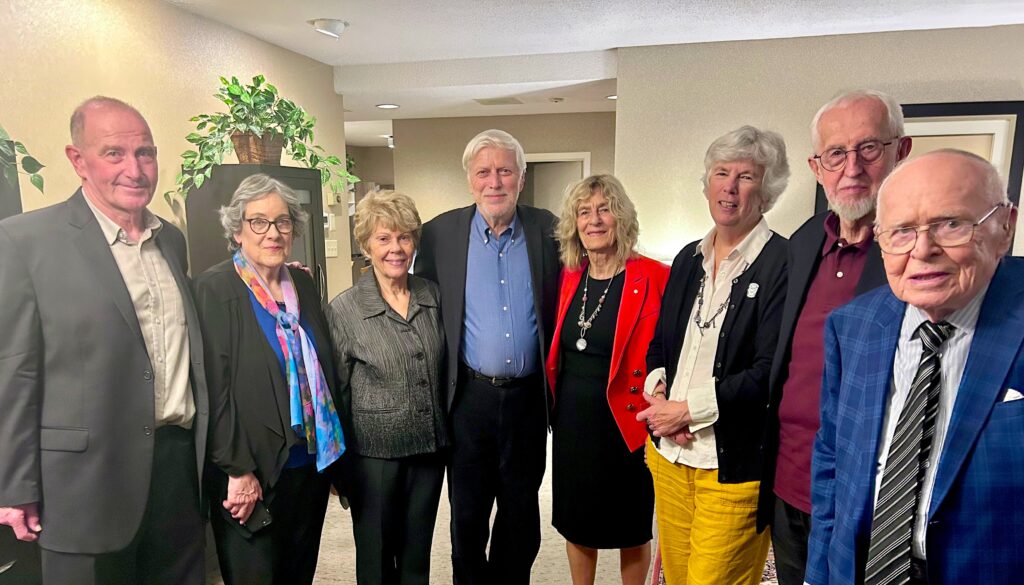
Photo of some winners of the Canadian Leadership for Nuclear Disarmament (formerly Canadians for a Nuclear Weapons Convention) Annual Achievement Award (left to right): Fergus Watt (2013), Bev Tollefson Delong (2012), Peggy Mason (2016), Paul Meyer (2022), Dr. Jennifer Allen Simons (2021), Debbie Grisdale (2018 ), Ernie Regehr O.C. (2024), Hon. Douglas Roche O.C. (2025).


Recent publications by Canadian Pugwash members

Ernie Regehr: Arctic military preparedness needs more ‘Jaw Jaw’ ” CIPS, November 11, 2025

Cesar Jaramillo: Golden Dome and the Myth of Invulnerability” Sane Policy Institute, November 4, 2025

Douglas Roche: Creative Dissent — A Politician’s Struggle for Peace” CLND lecture published in The Hill Times, Nov. 3, 2o25

Paul Meyer: “The Weaponization of Cyberspace and a New “Global Mechanism” at the UN” CIPS, Oct 22, 2025

Cesar Jaramillo: Gaza Genocide Must Be Called Out – With or Without an ICJ Ruling” Sane Policy Inst. Sept. 30, 2025

David Harries (co-speaker): AI and OUR Future – Safety and Security: The Promise, Peril, and the Public Good” KEI Network, Sept. 11, 2025

Jez Littlewood (co-author): How new technology could make it easier to identify covert bioweapons programs” Bulletin of Atomic Scientists, Sept. 15, 2025

Cesar Jaramillo: “The Deterrence Ceiling: Ukraine’s Postwar Security Under Russia’s Nuclear Shadow“, Sane Policy Institute, Sept, 13, 2025

Ernie Regehr: “When Winning Isn’t An Option” Arctic Security Briefing Paper, The Simons Foundation Canada, Sept. 9, 2025

Jeremy Whitock: “For 80 years, Canada has been a leader in the responsible development of nuclear energy“, Hill Times, August 11, 2025, [WhitlockHT]

Earl Turcotte: “As world marks 80 years since atomic anniversary, Canada has room to lead” The Hill Times, August 6, 2025

Robin Collins, Gordon Edwards, Jeremy Whitlock: Three letters on radiation issues The Hill Times, August 4, 2025

Sean Howard:‘Other, more benevolent things’: Revisiting Helsinki to prevent the final act of nuclear war”  Rethinking Securitiy, July 30, 2025.

Jeremy Whitlock: Remember, enriched uranium can do good” The Hill Times, Letter, July 21, 2025 [WhitlockHT]

Douglas Roche: Bob Rae is Feeling the UN’s Pain” The Hill TImes, July 16, 2025 [RocheHT]

Robin Collins:The Debate about Gaza’s Death Count and Human Shields” Rideau Institute, July 15, 2025

Cesar Jaramillo: “NATO Goes MAGA” Sane Policy Institute, July 8, 2025

Michael Manulak, broadcast: “Reflections on Canada and the Global Order” BrianCrombie.com, July 7, 2025

Sean Howard:Manifesting our humanity: Remembering how to survive in the nuclear age” The Cape Breton Post, July 4, 2025

Paul Meyer: The Future of Iran’s Nuclear Program: Could Withdrawal from the NPT be Next?” Policy, July 5, 2025

Robin Collins:Canada – and the world – need prudent not excessive military spending” Ceasefire Blog, July 2, 2025

Cesar Jaramillo:Flawed in principle and practice: why Canada must say no to Trump’s Golden Dome” The Hill Times, June 30, 2025

Douglas Roche: “The real Mark Carney is about to emerge” The Hill Times, June 30, 2025

Erika Simpson and Gordon Edwards: “Iran’s uranium enrichment: myths, realities, and what Canada should understand” The Hill Times, June 30, 2025

Michael Manulak, participant: “Canada’s foreign policy must catch up to its military spending” Globe and Mail, June 27, 2025

Paul Meyer:Canada Shouldn’t Buy into the Mirage of “Golden Dome” CIPS, June 25, 2025

Erika Simpson: “NATO’s dangerous new trajectory of expensive targets” The Hill Times, June 25, 2025

Peter Jones:Will Iran be Donald Trump’s Forever War?” Policy, June 22, 2025

Peggy Mason, participant: “Canada and Gaza: What are the Moral and Legal Obligations?” OFIP, June 16, 2025

Erika Simpson and Hwang, J.: “Forging Peace in 2025-2030: The Role of Canada and South Korea as Middle Powers in Leading Global Conflict Resolution“. In Factis Pax: Journal of Peace Education and Social Justice19(1). June 16, 2025

Jeremy Whitlock:Non-proliferation and the Nuclear Revival” 49th Annual CNS/CNA Student Conference, Toronto, June 8-11, 2025


Published views by members of CPG are not necessarily those of our organization.

PUGWASH and related events, October 2025 in Ottawa

Outcome details about these events will be posted shortly.

Thursday October 23, 4:00 to 6:00 PM
Award presentation to the Hon. Douglas Roche, O.C.
by Canadian Leadership for Nuclear Disarmament (CLND)

of the Award for Distinguished Service in Nuclear Disarmament followed
by Mr. Roche’s Lecture entitled “Creative Dissent: A Politicians’ Struggle for Peace” 

Friday, October 24 from 9:30 AM to 5:15 PM 
Conference on “Canadian Security Interests and Trump 2.0”
Co-sponsored by Canadian Pugwash Group (CPG) and University of Ottawa Centre for
International Policy Studies (CIPS)

Saturday October 25
8:45 AM to 10:15 AM: CNANW Annual meeting
Participants:  Members of CNANW member groups
Location:  Brittany Salon, Cartier Place Hotel.

10:30 AM – 12:00 PM: Canadian Pugwash Group (CPG) AGM
Participants: CPG Members
Location: Brittany Salon, Cartier Place Hotel

1:00 PM – 3:45 PM CNANW/CPG Nuclear Disarmament Advocacy Forum
This year’s theme is “Effective Advocacy for Nuclear Disarmament: Understanding Your Adversary”
is intended to strengthen capacity to advocate in support of nuclear disarmament; in
particular, understanding and making the most effective case against the doctrine of nuclear
deterrence.
Contributors:  Mr. Guy Roberts (recorded), former official with NATO and the US Defence Department on nuclear weapons policies,
Chinese Embassy to Canada representatives, and Mr. Alex Neve OC, Chairperson, Canadian Leadership for Nuclear Disarmament
Location:  Brittany Salon, Cartier Place Hotel

4:00 – 5:00 PM:  CPG Board Meeting
Location:  Brittany Salon, Cartier Place Hotel

The Douglas Roche Common Security Project: Invitation to a Youth Competition

If you are a 4th year undergraduate and/or graduate Canadian university student, this invitation is for you.

The Canadian Network to Abolish Nuclear Weapons (CNANW) in partnership with Canadian Pugwash Group are pleased to invite you to a youth competition to award three bursaries in the amount of $2,500 each for the production of an essay and/or video. The outcome is to explore the move from a world where some nations possess and rely upon nuclear weapons, to a global security paradigm based upon a Common Security framework, without nuclear weapons.  

You will find here the application letter with all the details: CNANW 2025 Douglas Roche Common Security Project – Application October 2025

The dates to remember are as follows:

·       The deadline for submission is December 1, 2025, 12:00 pm ET.

·       The selection committee aims to announce the three successful candidates on January 1, 2026, 12:00 pm ET.

·       The three selected participants will have four months, to 1 May 2026, to present their completed project. 

For any additional information, please contact Dr. Sylvie Lemieux, CNANW Steering Committee member and Board member of Group of 78, at slemieux3599@rogers.com  or Dr. Arnd Jurgensen, CNANW Steering Committee member and Board member of Science for Peace at ajurgensen@sympatico.ca.

We are looking forward to your application.

Regards,

The Douglas Roche Common Security Project Committee

Douglas Roche: Carney went to the UN to advance Canada’s foreign policy, Trump went to abuse, harangue the UN in a tirade of false accusations

The author is a member and past Chair of Canadian Pugwash Group
Published in The Hill Times, September 29, 2025

Mark Carney’s four days at the UN showed his belief that Donald Trump’s aggressiveness can be fought off by strengthening Canada’s trade, energy, and security through diplomacy. When Carney returned home and went to Question Period, the opposition seemed uninterested in grilling him on what he had accomplished at the UN. 

EDMONTON—The contrast could not have been sharper. Prime Minister Mark Carney went to the United Nations in New York from Sept. 21-24, and used the organization’s convening power to advance Canada’s foreign policy interests. United States President Donald Trump went to the UN for a few hours and abused the organization in a tirade of false accusations. These two story lines intersected, and Carney emerged as a new leader in the international community.

All this has to be seen in perspective. Of course, the U.S. is the giant whose every twitch grabs the headlines. When the escalator to the General Assembly broke down on Trump and his wife, CNN led with this malfunction as a metaphor about how the UN can’t get anything done. When Carney co-chaired a meeting with Ukraine President Volodymyr Zelenskyy on the plight of the Ukrainian children stolen by Russia, this humanitarian action was treated as just a side event.

For nearly an hour, Trump stood at the green podium in the General Assembly belittling and berating the UN for its immigration and climate policies. He mocked the UN for not choosing him as the developer when the headquarters was renovated decades ago, and treated the delegates as merely an extension of his usual MAGA audience. Carney dutifully showed up at the Canadian desk to listen to Trump’s harangue and later, at his own press conference, tried to smooth over Trump’s viciousness by saying he supported the president’s efforts to bring peace to the world. Carney, who is in the midst of Canada-U.S. trade negotiations, seems very conscious of Trump’s warning, “I only do business with the people I like,” and later took his wife Diana Fox Carney to Trump’s reception for the delegates.

Carney’s principal address affirmed Canada’s formal recognition of the State of Palestine, reinforcing this country’s support for a two-state solution to build peace between Israel and Palestine. The prime minister called for an immediate ceasefire in Gaza, the release of the Israeli hostages still held by Hamas, and the rapid scale-up of humanitarian relief in Gaza. Recognizing Palestine was certainly a late action by Canada, since more than 150 countries had already done so, but in the company of the United Kingdom and France in this UN setting, Carney felt comfortable moving ahead, despite Trump’s veiled threats he would punish Canada in the trade talks for such action. Only a few days previously, the U.S. had vetoed—again—a Security Council resolution demanding an immediate, unconditional and permanent ceasefire in the Gaza Strip.

Carney’s shining moment at the UN was his co-chairing, along with Zelenskyy, a meeting of 42 states to build pressure for the return of more than 20,000 Ukrainian children abducted by Russia. Accompanied by his wife, Carney called for more international support for the International Coalition for the Return of Ukrainian Children. The meeting laid plans to embed the return of the children within broader efforts for peace, reconciliation and accountability in Ukraine.

Carney then turned his attention to a meeting of specialists on the technicalities of achieving the Sustainable Development Goals, which has become an agonizing issue for the UN because the money that should be going to development processes in the most vulnerable states is being siphoned off by the escalating arms expenditures. The world now spends $2.7-trillion annually on arms, an amount which is 750 times greater than what nations devote to the UN. In his capacity as current chair of the G7, Carney tried to shore up the mechanisms to boost human development.

Here, Carney is doing high-wire diplomacy. He has acceded to Trump’s demand that NATO states devote five per cent of their GDP to defence spending, which, in Canada’s case, will mean a quadrupling of defence spending over the next decade. This will amount to $150-billion a year. Even if a good slice of this will be in the form of strengthening infrastructure here at home, defence spending will continue to dwarf what is spent on diplomatic efforts to build peace.

Yet it was diplomacy that Carney concentrated on during his four-day New York stay. He seemed moved by UN Secretary-General Antonio Guterres’ cry, “We have entered into an age of reckless disruption and relentless human suffering,” and leaders must decide now “what kind of world we choose to build together.” He met privately with Guterres and, according to Carney’s press statement, discussed Canada’s commitment to a “strong and effective” UN. Canada currently contributes $2.2-billion to the UN annually, and is the organization’s seventh-largest donor. He announced $207-million in new international assistance to improve global children’s nutrition and to address climate change.

The current UN financial crisis is caused by the U.S. defaulting on $1-billion in payments, and the Trump administration’s plans for a $1-billion cut in future assessments. This has already caused Guterres to lay off 15 per cent of UN staff. Trump, in his tirade against the UN, said not a word about America cutting back its payments.

China is stepping up its involvement in the UN administration and outreach. It was notable that Carney had a private meeting with the Premier of China, Li Qiang, to discuss canola, seafood and electric vehicles. This meeting laid the groundwork for a possible summit between Carney and China’s president Xi Jinping. If such a meeting were to occur, it would confirm Canada’s swing to renewed cooperation with the world’s second-largest economy, a move clearly designed to offset Canada’s economic dependence on the U.S.

Carney also met with the leaders of Namibia, Kenya, Barbados, Jamaica, Haiti and Malaysia in a burst of meetings that strengthened this country’s network of UN relationships. His four days at the UN showed his strong belief that Trump’s aggressiveness can be fought off by strengthening Canada’s trade, energy, and security through building networks of action with the UN at the core.

That is a message that desperately needs to be broadcast across the country, but I’m not sure it has been heard. When Carney went straight to Question Period in the House of Commons on his arrival back from New York, the opposition seemed not the least interested in grilling the prime minister on what he had accomplished at the UN.

Senator Douglas Roche’s latest book is Keep Hope Alive: Essays for a War-free World (Amazon).

The Hill Times


CPG: Canada Must Say No to ‘Golden Dome’ Strategic Missile Defence — A Call for Parliamentary Oversight

Canadian Pugwash Letter

Ahmed Hussen, Chair
Standing Committee on National Defence

Charles Sousa, Chair
Standing Committee on Foreign Affairs and International Development
House of Commons

Dear Chairs,

On behalf of the Canadian Pugwash Group, I am writing to express our grave concern about the Government of Canada’s movement toward participation in the United States’ proposed strategic ballistic missile defence initiatives within “Golden Dome”.

Recent reports suggest that the government is considering removing long-standing restrictions on strategic missile defence, paving the way for Canadian direct involvement in those elements of Golden Dome or similar schemes. Negotiations are reportedly already under way.

This situation raises profound questions of accountability and oversight. To date, there has been no parliamentary debate, committee review, or public consultation on whether Canada should commit tens of billions of dollars to what would be one of the most expensive and controversial military programmes ever launched. Decisions of this magnitude cannot be allowed to proceed with so little attention or accountability.

Read full letter here: CPG_Letter_GoldenDome_ParliamentaryOversight_Sept2025

Douglas Roche, O.C. Named 2025 Winner of CLND Award for Distinguished Achievement in Nuclear Disarmament


Douglas Roche, O.C. Named 2025 Winner of CLND Award for
Distinguished Achievement in Nuclear Disarmament:

Presentation and Lecture in Ottawa on October 23, 202

July 17, 2025

Douglas Roche, O.C. will receive the Canadian Leadership for Nuclear Disarmament (CLND) 2025 Distinguished Achievement Award. He has devoted himself over many decades to the vital cause of nuclear disarmament and, ultimately, the global abolition of nuclear weapons. CLND is a civil society initiative sponsored by the Canadian Pugwash Group. It is endorsed by more than 1,000 recipients of the Order of Canada who have called for Canada to work for comprehensive negotiations for the elimination of nuclear weapons.

“We are immensely proud to give this year’s Award to Douglas Roche, honouring his unwavering and inspiring leadership, for more than 50 years, resolutely focused on ridding the world of its catastrophically deadly arsenal of nuclear weapons,” said Alex Neve O.C., CLND Chairperson. “There is no one who has been so steadfast, brought so many others to this vital campaign, and shown all Canadians the moral clarity and pragmatic necessity of the cause. Doug Roche embodies the very epitome of the essence and finest qualities of leadership. And he has ardently and eloquently shown us all just what is at stake: our very survival.”

Douglas Roche has had the rare distinction of serving in the three roles of a Canadian Member of Parliament, Ambassador for Disarmament and Senator. He received appointments from two prime ministers of different parties: Brian Mulroney appointed him ambassador and Jean Chretien named him a senator. In all of those roles he has been a clarion voice for peace, justice and human rights, and has been untiring in his determined effort, in particular, to advance nuclear disarmament.

Roche, who is also a former Visiting Professor at the University of Alberta, has been a lifelong educator, informing Canadians of the risks posed by nuclear weapons and policy options to lessen those risks. He has written 25 books, and multiple articles and speeches. To strengthen disarmament education, he has organized many Parliamentary breakfasts, civil society meetings, roundtables, seminars, and briefings. He holds nine honorary doctorates and is an Officer of the Order of Canada.

Roche has also been integral to the creation of a wide range of effective nuclear disarmament advocacy groups. He was founding Chairperson of  Parliamentarians for Global Action, the Middle Powers Initiative, and the Canadian Network to Abolish Nuclear Weapons. He was the first international president of Parliamentarians for Nuclear Non-Proliferation and Disarmament.

“For his integrity, knowledge, dedication and unflagging hard work, Douglas Roche commands an exceptional – in fact unrivalled – level and degree of respect across Canada and globally, including from governments, UN officials, civil society leaders, academics, and peace and human rights activists,” said Neve. “At the age of 96, the determination and energy he continues to bring to this crucial campaign, sets a model that we all must aspire to follow.”

The Award will be presented at 4 PM on Thursday, October 23, 2025 and followed by Douglas Roche’s lecture, on “Creative Dissent: A Politician’s Struggle for Peace.” This public event is sponsored by CLND and the Centre for International Policy Studies (CIPS) at the University of Ottawa, in Room 4007 of the Faculty of Social Sciences Building, 120 University Private, Ottawa. The lecture will be followed by a reception and will conclude at 6 pm.


Previous recipients of the CNWC/CLND Achievement Award are:

2011 Murray Thomson

2012 Bev Tollefson Delong

2013 Fergus Watt

2014 Dr. Adele Buckley

2015 Paul Dewar

2016 Peggy Mason

2017 Metta Spencer

2018 Debbie Grisdale

2019 Dr. Mary-Wynne Ashford and Dr. Jonathan Down

2021 Dr. Jennifer Allen Simons

2022 Paul Meyer

2023 Tariq Rauf

2024 Ernie Regehr


Contact:    Elaine Hynes

CLND Secretariat

clnd@pugwashgroup.ca

EN / FR